India’s Relation’s With USSR/Russia

India’s relationship with the USSR (now Russia) has been one of its most enduring and strategic partnerships, shaped by historical ties, mutual interests, and shared perspectives on global issues. It has remained robust even after the dissolution of the Soviet Union in 1991, evolving to address the challenges and opportunities of the post-Cold War era. … Read more

India’s Relation’s With The U.S.A

India’s relations with the United States of America (U.S.A) have evolved significantly over the decades, transitioning from cautious engagement during the Cold War to a strategic partnership in recent years. The relationship reflects shared democratic values, economic interdependence, and mutual interests in addressing global challenges. Historical Overview Key Developments in U.S.-India Relations Challenges in the … Read more

Indian foreign Policy : Post Colonial Perspectives

India’s foreign policy, shaped by its post-colonial identity, reflects its unique historical, cultural, and geopolitical experiences. After gaining independence in 1947, India sought to navigate the complexities of the Cold War era and its position as a newly sovereign state in a bipolar world order. Key elements of its foreign policy include: 1. Non-Alignment Movement … Read more

Vladimir Ilyich Lenin : Introduction, Modifications of Marxist Theory, Theories of Leninism & View On State

Introduction Vladimir Ilyich Lenin (1870–1924) was a Russian revolutionary, political theorist, and leader of the Bolshevik Party. He played a key role in the Russian Revolution of 1917, which led to the establishment of the Soviet Union. Lenin built upon Karl Marx’s theories of socialism and communism, adapting them to suit the specific conditions of … Read more

Jayaprakash Narayan : Total Revolution

Jayaprakash Narayan (1902–1979), popularly known as JP, was a prominent Indian freedom fighter, socialist, and political reformer. His concept of Total Revolution (Sampoorna Kranti) emerged during the 1970s as a response to what he perceived as the growing moral, political, and social crisis in India. Total Revolution was an all-encompassing call for change that sought … Read more

Ram Manohar Lohia : Socialism

Ram Manohar Lohia (1910–1967), a prominent Indian freedom fighter and socialist thinker, developed a distinctive vision of socialism rooted in India’s socio-cultural realities. Unlike Nehru’s Fabian socialism or the Soviet-style centralization, Lohia advocated for a decentralized, non-violent, and culturally sensitive socialism that addressed the unique challenges of Indian society. Core Ideas of Lohia’s Socialism Key … Read more

Jawaharlal Nehru : Secularism, Socialism

Jawaharlal Nehru (1889–1964), India’s first Prime Minister, was a key architect of modern India’s political and economic framework. His ideas on secularism and socialism were central to his vision of a progressive and inclusive nation. Nehru’s interpretation of these concepts reflected his commitment to democracy, scientific temper, and equitable development. Nehru and Secularism Critiques of … Read more

Vinayak Damodar Savarkar : Hindutva – A Critical Assessment

Vinayak Damodar Savarkar (1883–1966), a prominent figure in India’s independence movement, is best known for articulating the ideology of Hindutva in his 1923 essay Hindutva: Who is a Hindu?. While Savarkar’s vision of Hindutva has been influential in shaping political and social movements in modern India, it has also been a subject of extensive critique … Read more

Rabindranath Tagore’s Critique of Nationalism

Rabindranath Tagore (1861–1941) was a towering figure in Indian literature, art, and philosophy, often regarded as one of the most versatile geniuses of modern times. Born in Kolkata, India, he was a polymath—poet, playwright, novelist, philosopher, painter, and composer—whose contributions transcended national and cultural boundaries. Tagore is best known for his poetry, particularly his collection … Read more

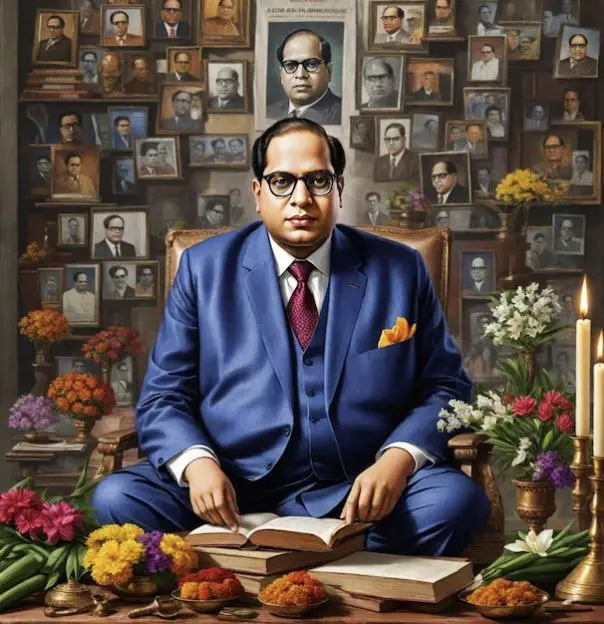
Dr. B.R Ambedkar : Social Justice

Dr. B. R. Ambedkar (1891–1956), popularly known as Babasaheb Ambedkar, was a visionary leader, social reformer, jurist, economist, and the principal architect of the Indian Constitution. Born into a Dalit (formerly untouchable) family in Mhow, Madhya Pradesh, he faced severe caste-based discrimination from an early age.Ambedkar’s father was Ramji Maloji Sakpal, a Subedar in the … Read more

wpChatIcon
wpChatIcon