Sovereignty : Meaning, Chareteristic’s, Kind’s / Type’s
Meaning of Sovereignty: Sovereignty refers to the ultimate authority and power of a state to govern itself or another state. It denotes a state’s full right and power to make laws, execute decisions, and conduct foreign policy without interference from external authorities. Sovereignty is a core principle in international law, symbolizing the independence and territorial … Read more
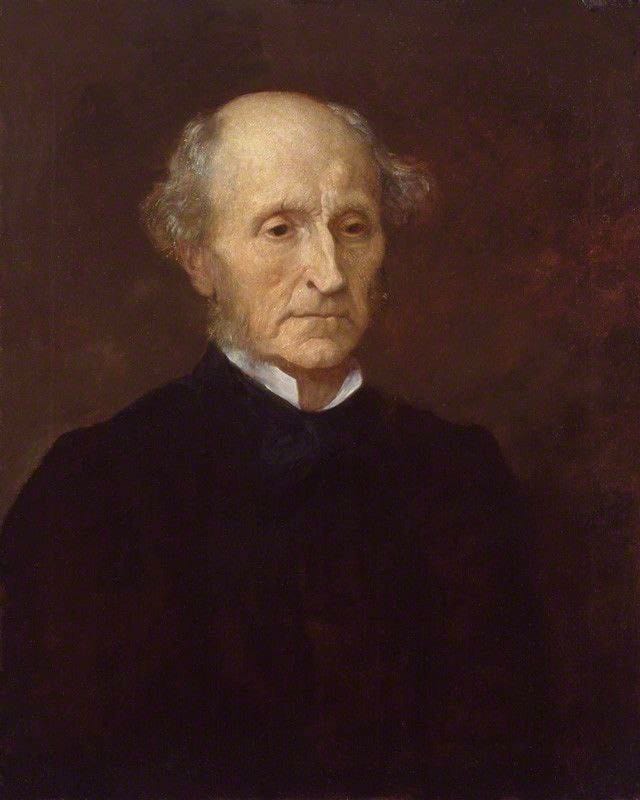

John Stuart Mill : Introduction, Theories, Criticism, and Conclusion

John Stuart Mill : Introduction, Theories, Criticism, and Conclusion 1. Introduction John Stuart Mill (1806–1873) was a British philosopher, political economist, and civil servant, widely regarded as one of the most influential figures in the development of liberal thought. Raised under the intellectual tutelage of his father, James Mill, and heavily influenced by Jeremy Bentham’s … Read more

Jean-Jacques Rousseau : Introduction, Theories, Criticism, and Conclusion

Jean-Jacques Rousseau: Introduction, Theories, Criticism, and Conclusion 1. Introduction Jean-Jacques Rousseau (1712–1778) was a Swiss-born philosopher, writer, and political theorist whose ideas significantly shaped the Enlightenment and influenced political and educational thought. Known for his belief in the natural goodness of humans and his critique of modern civilization, Rousseau stood in opposition to other Enlightenment … Read more

Transnational Corporations (TNCs): Meaning, Definitions, and Characteristics

Meaning of Transnational Corporations A Transnational Corporation (TNC) is a large business enterprise that operates in multiple countries but does not identify any one country as its national home. Unlike Multinational Corporations (MNCs), which typically have a home base or headquarters in one country, TNCs spread their operations, decision-making, and management across various countries. This … Read more

Multinational Corporations (MNCs): Meaning, Definitions, and Characteristics

Meaning of Multinational Corporations (MNCs) A Multinational Corporation (MNC) is a company that operates in multiple countries, managing production or delivering services in more than one country outside its home base. MNCs leverage their global presence to access resources, markets, and efficiencies that may not be available in a single country. These corporations play a … Read more

World Trade Organization : Meaning, Regulate’s, Signed Year, Basic Principles, Structure & Functions

Meaning of the World Trade Organization (WTO) The World Trade Organization (WTO) is an international organization that regulates global trade between nations. Its primary objective is to ensure that trade flows as smoothly, predictably, and freely as possible. It provides a framework for negotiating trade agreements and a dispute resolution process aimed at enforcing member … Read more

World Bank: Meaning, Formation, Member Groups, Objectives, and Functions

Meaning of the World Bank The World Bank is an international financial institution that provides financial and technical assistance to developing countries for development projects aimed at reducing poverty and promoting economic growth. These projects span sectors such as infrastructure, education, healthcare, and agriculture. The World Bank’s primary mission is to end extreme poverty and … Read more

International Monetary fund (IMF) : Meaning, Definitions, Objects, Structure & Functions

International Monetary Fund (IMF) : Meaning, Definition, Objectives, Structure, and Functions Meaning of IMF : The International Monetary Fund (IMF) is an international organization established to promote global monetary cooperation, secure financial stability, facilitate international trade, promote high employment and sustainable economic growth, and reduce poverty around the world. The IMF works with its 190 … Read more

Global Economy : Meaning & Significance

Global Economy : Meaning and Significance Meaning of the Global Economy The global economy refers to the interconnected economic activities of countries around the world. It encompasses the production, trade, investment, and consumption of goods and services that occur across national borders. Essentially, the global economy is the sum total of all economic interactions happening … Read more

Globalization : Non – Proliferation Regimes

Globalization and Non-Proliferation Regimes Globalization has significantly influenced the structure and implementation of non-proliferation regimes worldwide. Non-proliferation regimes refer to international frameworks, treaties, and agreements that aim to prevent the spread of weapons of mass destruction (WMDs), including nuclear, chemical, and biological weapons. These regimes are crucial in maintaining global security and stability, particularly in … Read more