Electric Field and Electric Potential

(Electrostatics – Physics Honours Notes) 📌 1. Electric Field (𝐄⃗ ) Electric field represents the influence of a charge on the surrounding space. E=Qr4πϵ0R3E = \frac{Qr}{4\pi\epsilon_0 R^3}E=4πϵ0​R3Qr​ (∝ r ⇒ zero at center) ⭐ B) Cylindrical Symmetry — Infinite Line of Charge E=λ2πϵ0rE = \frac{\lambda}{2\pi\epsilon_0 r}E=2πϵ0​rλ​ ⭐ C) Planar Symmetry — Infinite Plane Sheet E=σ2ϵ0E … Read more
📘 Oscillations & Special Theory of Relativity

UG Physics (Honours) Notes 🔹 1️⃣ Oscillations ⭐ Simple Harmonic Motion (SHM) A body performs SHM when acceleration is directly proportional to displacement and directed towards the mean position:a=−ω2xa = -\omega^2 xa=−ω2x General solution:x(t)=Acos⁡(ωt+ϕ)x(t) = A\cos (\omega t + \phi)x(t)=Acos(ωt+ϕ) Where γ=b2m\gamma = \frac{b}{2m}γ=2mb​, ω′=ω2−γ2\omega’ = \sqrt{\omega^2 – \gamma^2}ω′=ω2−γ2​ ⭐ Forced Oscillations Equation:mx¨+bx˙+kx=F0cos⁡(ωt)m\ddot{x} + b\dot{x} … Read more

🌍 Gravitation & Central Force Motion

UG Physics (Honours) Notes ⭐ Newton’s Law of Gravitation Newton stated that every two masses in the universe attract each other with a force:F=Gm1m2r2F = G\frac{m_1 m_2}{r^2}F=Gr2m1​m2​​ Examples: Gravitational force, Electrostatic force. 🔸 Two-Body Problem → One-Body Reduction Two masses m1,m2m_1, m_2m1​,m2​ interacting through central force are reduced to: μ=m1m2m1+m2\mu = \frac{m_1 m_2}{m_1 + m_2}μ=m1​+m2​m1​m2​​ … Read more

📘 Elasticity & Fluid Motion

UG Physics (Honours) Notes 1️⃣ Elasticity Elasticity is the property of a material by which it returns to its original shape after removing external forces. Where:ηηη = Shear modulus, rrr = Radius, lll = Length, θθθ = Twist angle Bending of Beams When a beam with length LLL is loaded at its end, it bends. … Read more

Rotational Dynamics & Non-Inertial Systems

UG Physics (Honours) Notes 1️⃣ Rotational Dynamics Rotational motion deals with bodies that rotate about an axis. Just like linear motion involves force and momentum, rotation involves torque and angular momentum. Angular Momentum For a particle:L⃗=r⃗×p⃗\vec{L} = \vec{r} \times \vec{p}L=r×p​ For a system of particles:L⃗total=∑Li⃗\vec{L}_{total} = \sum \vec{L_i}Ltotal​=∑Li​​ Principle of Conservation of Angular Momentum If … Read more

Vector Differentiation and Vector Integration

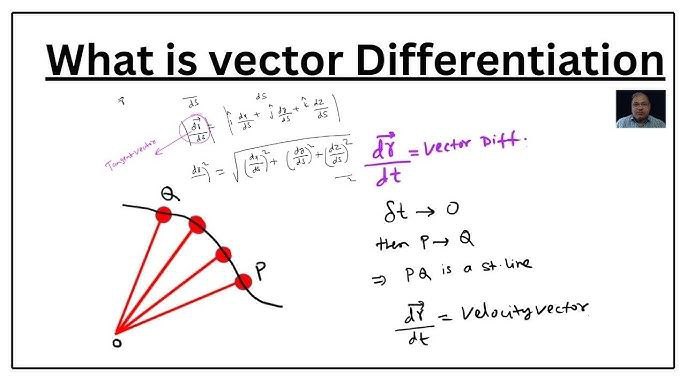
Calculus – II | Undergraduate Mathematics Notes Vectors play a crucial role in describing physical quantities such as force, velocity, electric and magnetic fields. Vector calculus deals with the differentiation and integration of vector fields in space. 🔹 1️⃣ Vector Differentiation Directional Derivative Measures the rate of change of a scalar field in a given … Read more

Orthogonal Curvilinear Coordinates and Dirac Delta Function

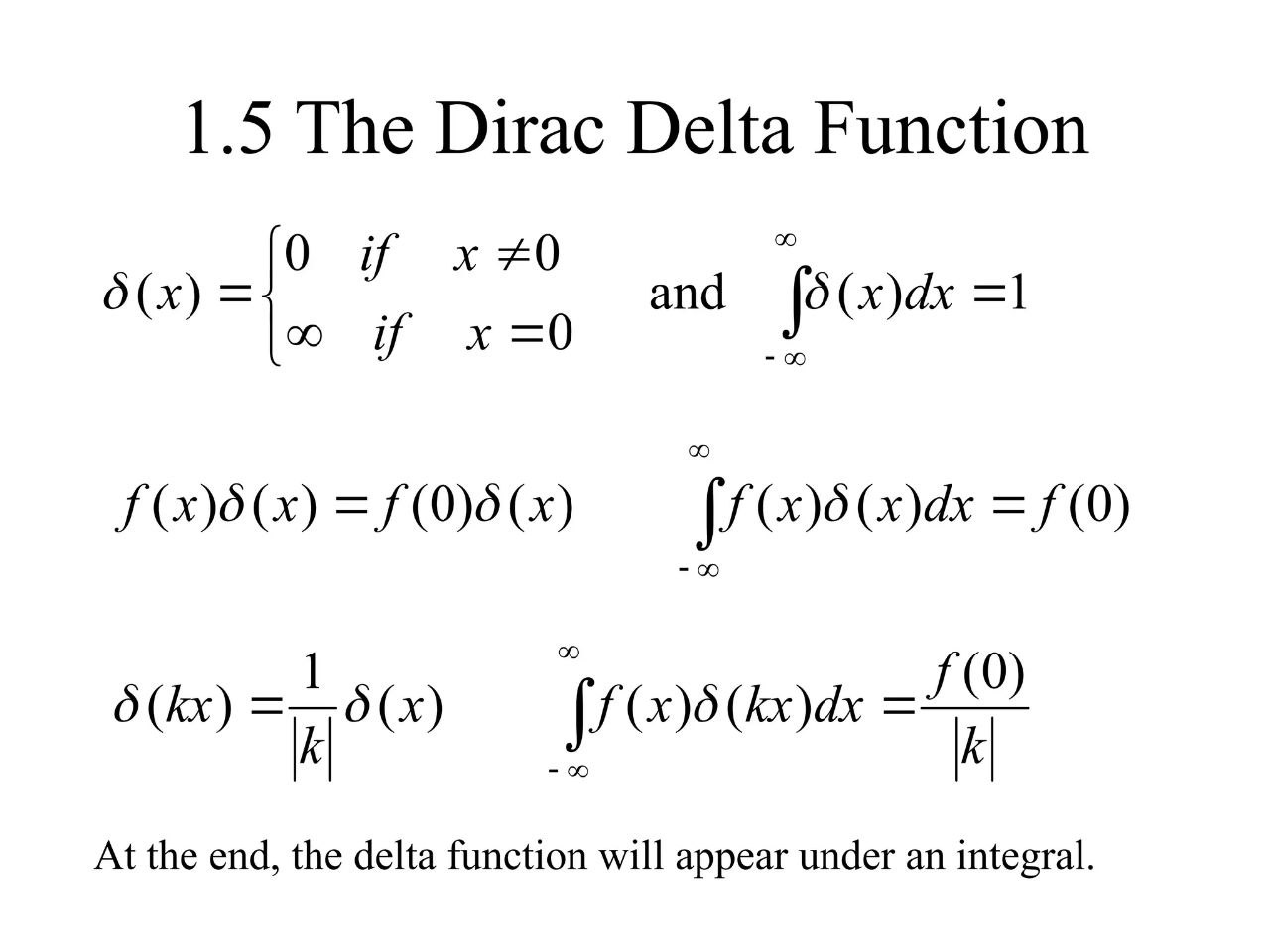
Calculus – II | Undergraduate Mathematics In many physical and engineering problems, the geometry of motion or fields may not be suitable for Cartesian (x, y, z) coordinates. To handle such problems efficiently, Orthogonal Curvilinear Coordinate Systems like Cylindrical and Spherical are used. This chapter also introduces an important mathematical tool — the Dirac delta … Read more

Calculus – II: Functions of Several Variables and Vector Algebra

For Undergraduate Students Calculus–II extends the concepts of single-variable calculus into functions of more than one variable. It is an essential mathematical tool for Physics, Chemistry, Engineering, Computer Science, and Economics. This chapter introduces partial derivatives, optimization, and vector algebra, which are widely used in real-world problem solving. 🔹 1️⃣ Calculus of Functions of More … Read more

Calculus – I

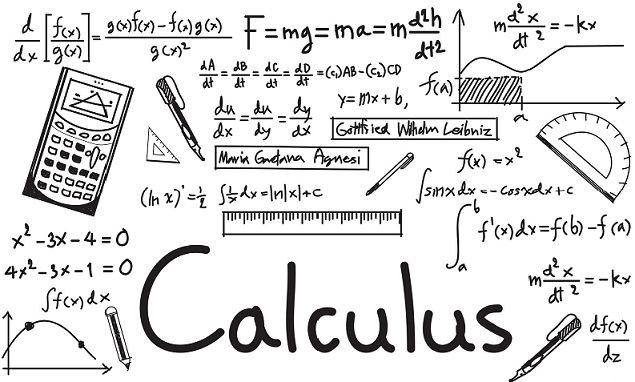
Calculus is one of the most important areas of Mathematics for undergraduate students across science, commerce, and engineering streams. It helps us understand how quantities change and provides tools for modeling real-world problems in physics, economics, biology, and engineering. This article covers the core topics of Calculus – I, including plotting of functions, continuity, differentiability, … Read more

wpChatIcon
wpChatIcon